Platform · Brand context
Lock brand voice once. Use it everywhere.
Tone, audience, voice, and avoid rules in Settings. New Operators inherit them, drafts stay consistent.
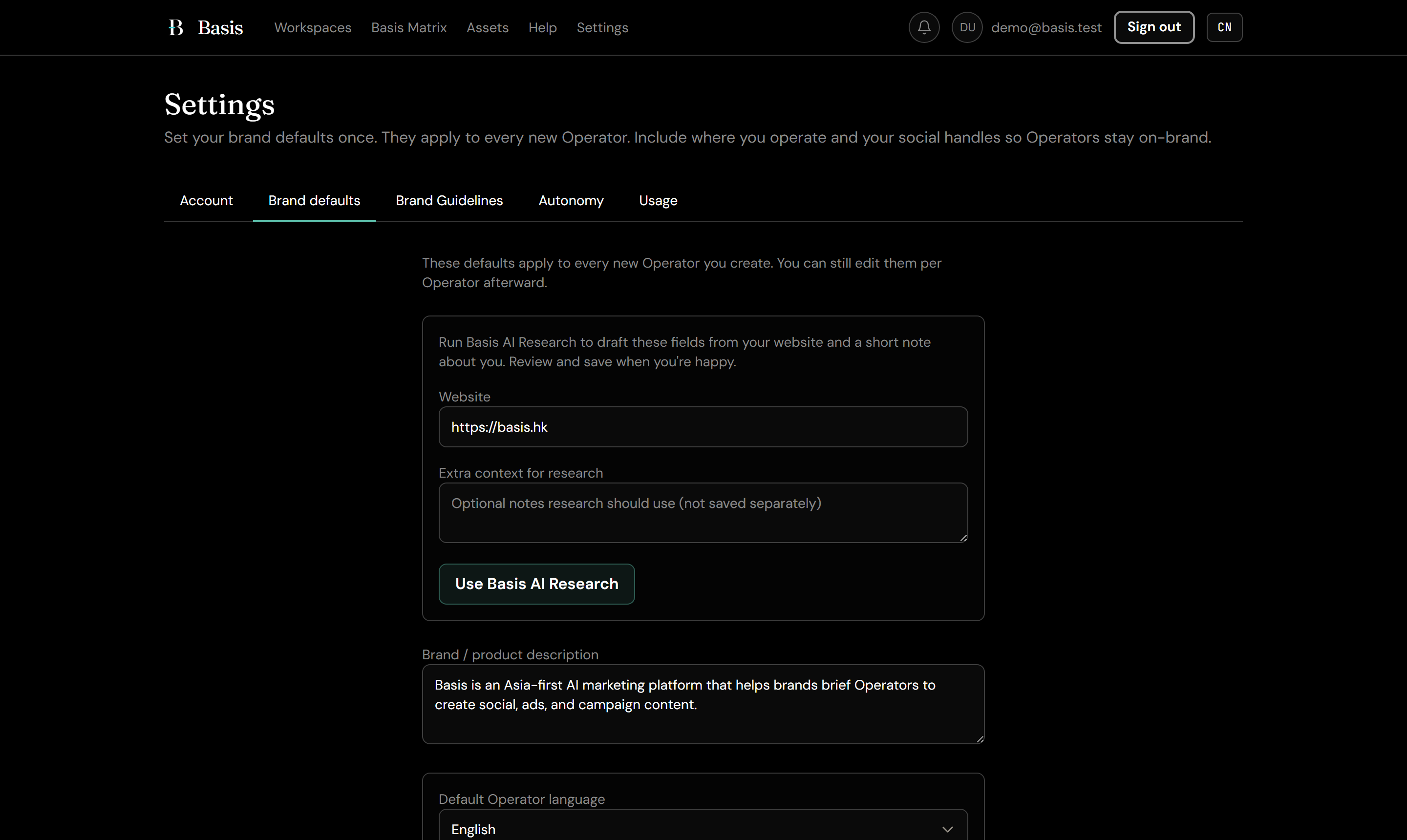
Global brand defaults
One place for description, tone, audience, voice, and avoid lists.
Per-Operator overrides
Tune tone or audience for a campaign or client, without rewriting the system.
Applied automatically
Context rides with every brief. No pasting guidelines into each prompt.
Safer volume
Claims and sensitive topics stay out, even when juniors brief at speed.
How brand context travels
Settings → Operators → drafts. The same spine whether you’re generating hooks or long-form.
What to encode
- Brand description and positioning in plain language
- Tone spectrum (e.g. warm vs clinical, formal vs peer)
- Primary audiences and what they care about
- Avoid lists: claims, competitors, sensitive topics
- Market notes: formality, bilingual needs, festivals
Why it matters in APAC
Formality and claims shift by market. WeChat Official Accounts are not RedNote notes, and Threads is not Douyin. Encode that once, then override lightly per Operator, instead of translating a global deck after creative is done. Scroll-stop scoring uses those same notes as generation constraints — a Hong Kong Reel and a Tokyo Xiaohongshu note are not judged against a US feed.
Scroll-stop uses this brand context →Cortex holds the examples — not a rewrite of these rules →Need AI creative or a system built for you? Agency →Put brand context to work
Create Operators that inherit your voice, then brief them in the workspace.